A plateau is not one difficult workout. It is a repeated period where a lift, muscle group, or training outcome stops improving despite consistent effort. The solution depends on the cause, so diagnose before you change everything.
Review at least three comparable sessions. Check load, reps, technique, range of motion, rest times, and body weight. If one metric improved, you may still be progressing even when the weight on the bar did not change.
Cause 1: You need a clearer progression rule
Randomly adding weight can trap you between loads. Use a rep range. Build from the bottom to the top with the same weight, then increase the load and repeat. See the full process in our progressive overload guide.
Cause 2: Fatigue is hiding your fitness
If several lifts decline, motivation falls, and soreness lingers, reduce training volume for one week. Keep technique work, use lighter loads, and return with slightly less weekly volume. More work is not always more stimulus.
Cause 3: The target muscle needs more productive work
If recovery is strong but one area remains stagnant, add two weekly sets or improve exercise selection. Use the decision rules in our guide to weekly sets per muscle group.
Cause 4: The exercise no longer fits
An exercise may be limited by discomfort, stability, or equipment. Switch to a close alternative that lets you train the same movement and muscle more consistently. Avoid changing every exercise at once, because you lose your performance baseline.
Cause 5: Recovery or nutrition is inconsistent
Keep sleep and wake times as consistent as possible.
Eat enough protein and total calories for your goal.
Place demanding sessions away from your most stressful days.
Use realistic weekly frequency instead of missing an ambitious plan.
A two-week plateau reset
Week 1: reduce sets by about one-third and leave more reps in reserve.
Week 2: return to normal sets with slightly conservative loads.
Keep the main exercises stable and log every set.
At the end of week 2, compare total reps, technique, and recovery.
If nothing improves, change one variable: exercise, weekly sets, or rep range. Do not change all three. A precise log, as described in our workout tracking guide, will show whether the adjustment worked.
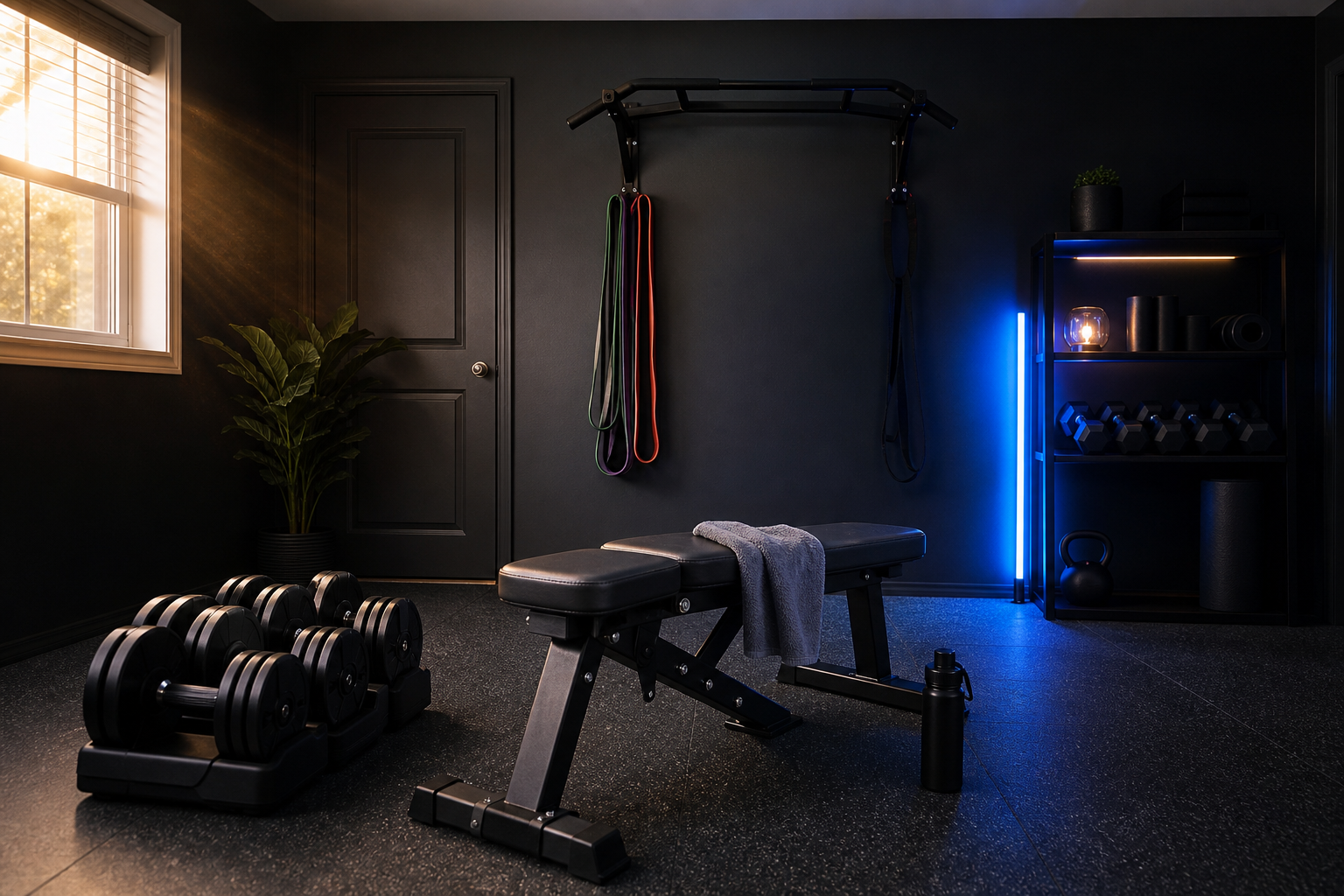
You can build a strong, balanced program with adjustable dumbbells and a bench. Limited equipment changes exercise selection, but it does not remove the fundamentals: train every major movement, work close enough to technical failure, and improve your results over time.
Train on three nonconsecutive days, such as Monday, Wednesday, and Friday. Alternate the two sessions: Week 1 is A/B/A, and Week 2 is B/A/B.
Workout A
Goblet squat — 4 sets of 8–15
Dumbbell bench press — 4 sets of 6–12
One-arm dumbbell row — 4 sets of 8–15 per side
Dumbbell Romanian deadlift — 3 sets of 8–15
Seated lateral raise — 3 sets of 12–20
Plank — 3 controlled sets
Workout B
Bulgarian split squat — 3 sets of 8–15 per side
Incline dumbbell press — 4 sets of 8–15
Chest-supported dumbbell row — 4 sets of 8–15
Dumbbell hip thrust — 3 sets of 10–20
Seated dumbbell shoulder press — 3 sets of 8–15
Dumbbell curl + lying triceps extension — 2–3 sets each
How to progress with limited weight
Add reps within the listed range.
Slow the lowering phase while preserving control.
Use a longer range of motion.
Move from bilateral to single-leg variations.
Add a set only when recovery remains good.
When every set reaches the top of the rep range, increase the dumbbell load and return to the lower end. This double-progression method is explained in our progressive overload guide.
What this setup cannot do perfectly
Very strong lifters may eventually outgrow the available dumbbells for squats and hinges. Use unilateral work, higher rep ranges, and controlled tempo before buying more equipment. A pull-up bar is the most useful next addition because it expands vertical pulling options.
Make the plan sustainable
Choose training times you can repeat, keep the dumbbells accessible, and log every working set. A home plan wins through convenience only when the sessions actually happen.
A busy gym does not have to ruin your workout. The key is to replace the unavailable exercise with a movement that keeps the same training purpose—not simply the first open machine.
Compare four things: movement pattern, target muscle, joint position, and stability. A barbell bench press can become a dumbbell bench press or chest-press machine because all three are stable horizontal presses. A cable fly is useful chest work, but it is not the closest substitute for a heavy press.
Smart substitution examples
Squat pattern
Back squat → front squat, hack squat, leg press, or heavy goblet squat.
Bulgarian split squat → reverse lunge, step-up, or single-leg press.
Hip hinge
Romanian deadlift → dumbbell Romanian deadlift, good morning, or cable pull-through.
Barbell hip thrust → machine hip thrust, glute bridge, or dumbbell hip thrust.
You do not need to copy the exact weight from the original exercise. Choose a load that lands in the same target rep range with similar effort. Machine numbers and dumbbell loads are not directly comparable.
When not to substitute
If a movement is central to a specific skill goal—such as practicing the competition squat—waiting may be worth it. For general muscle and fitness goals, consistent high-quality work matters more than loyalty to one piece of equipment.
Record the change
Log the exact alternative so you can compare it with the same movement later. Our guide to tracking workouts explains how to preserve useful performance history.
A workout log is useful only when it changes your next decision. Recording random numbers after training is not the goal. You want a simple history that tells you what to repeat, what to increase, and when fatigue is getting in the way.
Exercise: include the variation, such as incline dumbbell press instead of simply “press.”
Load: record the weight used with the correct unit.
Reps: log every working set, not only the best set.
Effort: estimate how many clean reps remained.
Context: note substitutions, pain, unusual fatigue, or shortened rest.
Log during the workout
Waiting until later creates errors. Enter each set while you rest. The process should take seconds and should not distract you from training.
Review the previous session before you lift
Your last result creates today’s target. If you performed 60 pounds for 10, 10, and 9 reps in a target range of 8–12, a useful goal is 10, 10, and 10 with the same load. When every set reaches the top of the range with good technique, increase the load.
Use trends, not one-off sessions
Sleep, stress, meal timing, and equipment availability can affect one workout. Look at two to four weeks before changing the entire program. A single bad day is noise; a repeated decline is a signal.
Weekly review checklist
Which exercises gained reps or weight?
Where did technique improve?
Which muscles are not recovering?
Did you complete the planned sessions?
Do any exercises need a safer or more practical alternative?
Common tracking mistakes
Changing exercises so often that comparisons become impossible.
Recording only weight and ignoring reps.
Treating every personal best as permission to add load immediately.
Comparing different machines as if their weight stacks were identical.
The right number of weekly sets is not a universal number. Your experience, exercise selection, training effort, sleep, and schedule all change how much productive work you can recover from. The useful goal is simple: do enough quality work to progress, but not so much that fatigue stalls the next session.
A working set is a challenging set performed with stable technique. Warm-ups prepare you to lift but usually do not count toward your weekly volume. A set of ten that ends with five or six easy reps still available creates a different stimulus from a set that ends with one to three reps in reserve.
Practical weekly set ranges
Beginner: about 6–10 challenging sets per muscle group per week.
Intermediate: about 8–16 sets, depending on frequency and recovery.
Advanced: often 10–20 sets, but only when the extra work remains productive.
These are starting ranges, not targets you must max out. Six excellent sets that improve week to week beat sixteen rushed sets that never progress.
Count indirect work intelligently
Compound lifts train more than one muscle. Bench presses primarily train the chest, but also challenge the triceps and front delts. Rows train the back while the biceps assist. Do not count every assisting muscle as a full set, but do account for the fatigue it receives.
How to distribute sets
Most lifters perform better when weekly volume is split across two sessions instead of compressed into one marathon workout. If you need twelve weekly chest sets, six on Monday and six on Thursday will usually preserve rep quality better than twelve in one session.
When to add a set
Your technique is stable and target reps are improving.
You recover before the next session.
The muscle is not progressing despite consistent sleep and nutrition.
You can add volume without extending workouts beyond what you can sustain.
When to reduce volume
Performance falls for multiple sessions.
Soreness interferes with technique or daily activity.
Joint discomfort increases.
You are adding sets but not reps or load.
A simple adjustment rule
Start near the low end of the range. Track the same plan for three to four weeks. If performance improves, keep volume steady. If recovery is good but a muscle does not progress, add two weekly sets. If performance declines, remove two to four sets or schedule a lighter week.
Your first gym program should make training easier to understand, not overwhelm you with advanced techniques. For the first eight weeks, your main goals are simple: learn stable movement patterns, build a repeatable schedule, and record enough information to see progress.
This three-day plan trains the whole body several times across the week and gives you room to improve without excessive soreness.
Train three nonconsecutive days, such as Monday, Wednesday, and Friday. Alternate Workout A and Workout B. Week one is A/B/A, week two is B/A/B, and the pattern continues.
Workout A
Leg press or goblet squat — 3 × 8–12
Dumbbell bench press — 3 × 8–12
Lat pulldown — 3 × 8–12
Romanian deadlift — 2 × 8–12
Lateral raise — 2 × 12–15
Plank — 2 controlled sets
Workout B
Split squat or hack squat — 3 × 8–12
Seated dumbbell shoulder press — 3 × 8–12
Chest-supported row — 3 × 8–12
Leg curl — 2 × 10–15
Biceps curl — 2 × 10–15
Triceps pressdown — 2 × 10–15
Weeks 1–2: Learn the movements
Choose loads that leave about three good reps in reserve. Focus on the same setup, full comfortable range of motion, and controlled repetitions. Stop a set if technique changes sharply. These weeks are practice, not a test of toughness.
Weeks 3–4: Build consistency
Keep exercises stable and begin adding reps inside the target range. If you completed 9, 9, and 8 last time, aim for one or two additional total reps—not a huge weight jump.
Weeks 5–7: Progress the load
When every work set reaches the top of its rep range with clean technique, increase the weight by the smallest practical amount. Then build the reps again. Read our progressive overload guide for exact examples.
Week 8: Review and reset
If you feel strong and performance is improving, continue normally. If fatigue is high, reduce each exercise by one set or use roughly 10 percent less weight for the week. Review your log and identify which lifts improved, which need more technique practice, and which caused discomfort.
How to choose starting weights
Use a conservative first set. If you can perform the top of the range with many reps left, add a small amount for the next set. If you cannot reach the bottom of the range cleanly, reduce it. The correct starting load is the one that makes every target rep controlled.
Basic gym rules that matter
Warm up with lighter sets before the first demanding lift.
Rest two minutes after compound exercises and 60–90 seconds after smaller movements.
Record weight and reps immediately.
Use the same exercise long enough to learn it.
Swap a machine only when needed, not for novelty.
Leave the gym feeling like you could recover and train again.
Nutrition and recovery basics
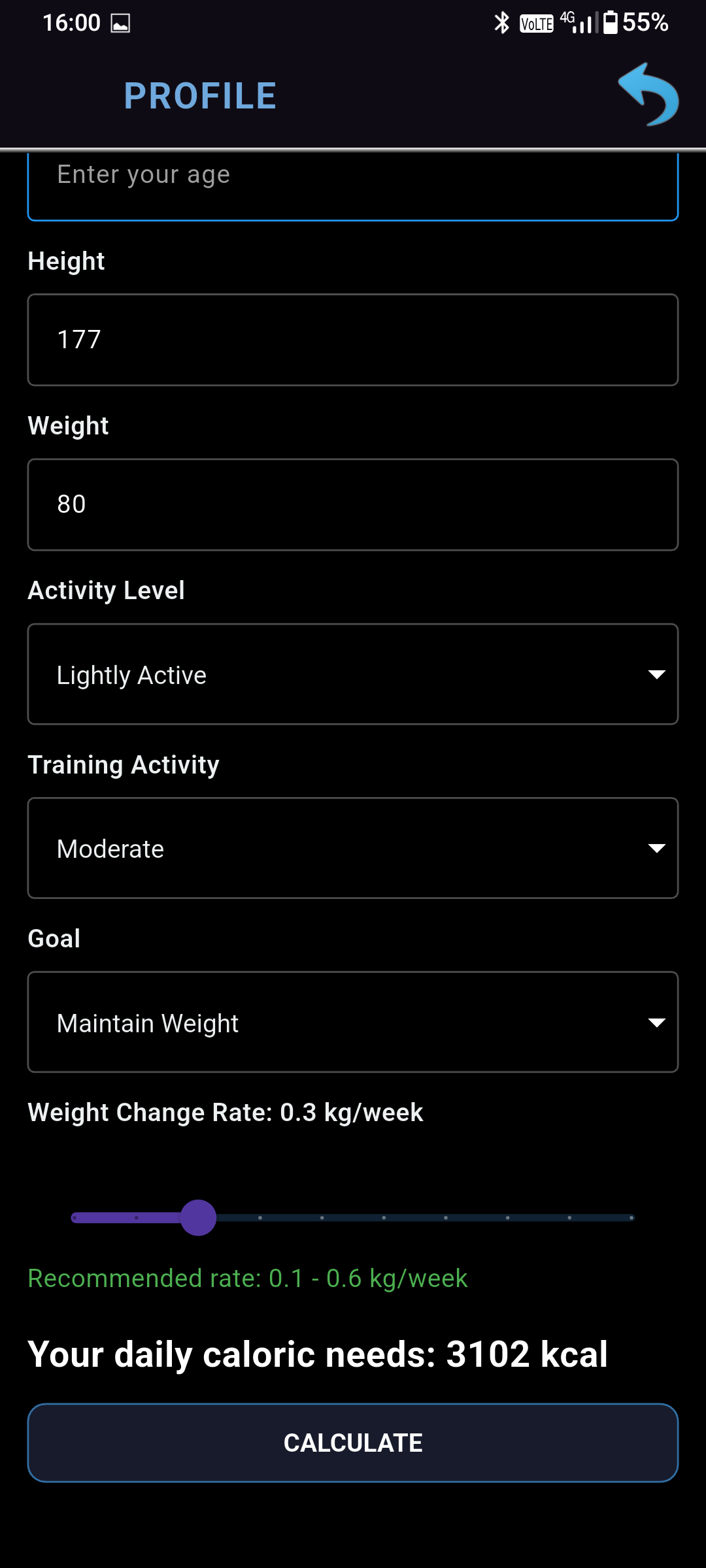
Progress is easier with consistent sleep, enough protein, and calories aligned with your goal. You do not need a perfect meal plan. Start with regular meals, a protein source at each meal, fruits and vegetables, water, and a body-weight trend measured over several weeks.
What happens after eight weeks?
Do not replace the plan automatically. Keep exercises that are progressing and feel good. Change only what your schedule, equipment, or results justify. You may add one set to a priority muscle or move to the three-day upper/lower/full-body plan.
Your first program succeeds when it teaches you how to train independently. Keep it simple, log everything, and let repeatable performance guide the next step.
Upper/lower and push/pull/legs are two of the most popular workout splits for good reason: both can organize enough weekly work to build muscle and strength. The better choice depends less on internet rankings and more on how many days you can train consistently.
This comparison will help you choose a structure based on schedule, recovery, exercise variety, and experience—not hype.
What is an upper/lower split?
An upper/lower split groups chest, back, shoulders, and arms into upper-body sessions, while quads, hamstrings, glutes, calves, and core are trained on lower-body days. A standard week uses four sessions: Upper A, Lower A, Upper B, and Lower B.
Best fit: three or four training days
Frequency: most muscles twice per week
Main advantage: excellent balance between volume and recovery
Tradeoff: upper sessions can become long if every muscle gets too many exercises
What is push/pull/legs?
Push days train chest, shoulders, and triceps. Pull days train back, rear delts, and biceps. Leg days train the lower body. The split can run three days per week or twice through over six days.
Best fit: three, five, or six training days
Frequency: once weekly on a three-day version or twice weekly on six days
Main advantage: focused sessions with more exercise variety
Tradeoff: the six-day version demands excellent consistency and recovery
For four days per week, upper/lower is the clear and simple choice. Each muscle gets two weekly exposures without compressing recovery. For six days, push/pull/legs creates shorter, more focused sessions and distributes volume well.
For three days, a strict push/pull/legs rotation trains each muscle directly only once per week. It can work, but many lifters do better with the upper/lower/full-body structure because it provides more frequent practice and stimulus.
Which is better for beginners?
Beginners usually benefit from fewer exercises, more frequent practice of basic movement patterns, and clear progression. A three-day full-body plan or four-day upper/lower plan is often easier to learn and recover from than a high-volume six-day routine.
Which is better for muscle growth?
Neither split has a special hypertrophy advantage when weekly hard sets, exercise selection, effort, and recovery are similar. The better split is the one that lets you distribute productive volume without making individual sessions excessively long or reducing performance.
Which is better for strength?
Strength improves through high-quality practice of specific lifts. Upper/lower naturally places squat and hinge patterns on lower days and presses and rows on upper days. Push/pull/legs can also work, but heavy benching and overhead pressing on the same push day may require careful fatigue management.
Schedule recommendations
Available days
Recommended structure
2 days
Full body twice
3 days
Upper / Lower / Full Body
4 days
Upper / Lower
5 days
Upper / Lower + Push / Pull / Legs rotation
6 days
Push / Pull / Legs twice
How to make the final decision
Choose the number of days you can maintain for at least eight weeks.
Keep most muscles near two productive weekly exposures.
Avoid sessions so long that later exercises become low-quality work.
Use a written progression rule and log each session.
Do not copy six-day volume into a four-day schedule without adjusting it.
Upper/lower is the most broadly useful option for four-day lifters. Push/pull/legs is excellent when you genuinely enjoy frequent gym sessions and can recover from them. Your calendar, not the split’s popularity, should make the decision.
Three training days per week is a sweet spot for people who want real gym progress without organizing their entire life around the gym. It offers enough weekly stimulus to build muscle and strength while leaving four days for recovery, work, family, and everything else.
The best split is not the one with the most exercises. It is the one you can repeat, track, and progress. Below is a complete three-day framework, plus options for adjusting it to your experience and schedule.
Every major muscle group can be trained at least twice across the week.
Recovery is easier than with five or six demanding sessions.
Missed days are easier to reschedule.
Sessions can stay focused instead of becoming random full-body marathons.
Progress is simple to measure with a repeatable rotation.
The recommended split
Use an Upper / Lower / Full Body structure. Train Monday, Wednesday, and Friday or any pattern that places at least one rest day between sessions. The full-body day gives each major area a second weekly exposure without requiring another long workout.
Day 1: Upper body
Bench press or dumbbell press — 3 sets of 6–10
Chest-supported row — 3 sets of 8–12
Overhead press — 2 sets of 8–12
Lat pulldown or pull-up — 3 sets of 8–12
Lateral raise — 2 sets of 12–20
Biceps curl — 2 sets of 10–15
Triceps pressdown — 2 sets of 10–15
Day 2: Lower body
Back squat or leg press — 3 sets of 6–10
Romanian deadlift — 3 sets of 8–12
Split squat — 2 sets of 8–12 per side
Leg curl — 2 sets of 10–15
Calf raise — 3 sets of 10–15
Plank or cable crunch — 3 sets
Day 3: Full body
Incline dumbbell press — 3 sets of 8–12
Pull-up or pulldown — 3 sets of 6–12
Goblet squat or hack squat — 3 sets of 10–15
Hip thrust — 3 sets of 8–12
Cable row — 2 sets of 10–15
Lateral raise — 2 sets of 12–20
Optional arm superset — 2 sets each
How long should each workout take?
Most sessions should take 50–75 minutes. Rest two to three minutes after demanding compound lifts and 60–90 seconds after smaller isolation exercises. If time is limited, pair noncompeting movements such as rows with presses or curls with calf raises.
How to progress
Use a rep range and add reps before adding load. When you complete the top of the range on all planned sets with clean technique, use the smallest practical weight increase. Our progressive overload guide explains the full system.
Adjustments for beginners
Start with two work sets on most exercises and keep one to three good reps in reserve. Use stable variations such as machine presses, leg presses, pulldowns, and chest-supported rows while you learn technique. Add volume only after recovery and consistency are established.
Adjustments for experienced lifters
Add a third or fourth set only to priority muscles. Keep the weekly structure stable for six to eight weeks, rotate rep ranges when useful, and avoid turning the full-body day into another maximal session. Its job is to deliver productive volume without compromising recovery.
What if you miss a day?
Continue with the next workout in the rotation. Do not cram two full sessions together to “catch up.” A Monday-Wednesday-Friday plan can temporarily become Monday-Friday-Sunday. The order matters more than the name of the weekday.
The bottom line
A strong three-day split is balanced, repeatable, and easy to progress. Start with the template, match exercises to your equipment, and record every set. Consistency over several months will outperform a more complicated plan you cannot maintain.
Progressive overload is the simplest idea behind long-term strength and muscle gain: your training has to become more demanding over time. The challenge is applying it without turning every workout into a max-effort test.
Progressive overload means gradually increasing the training stimulus your body must adapt to. More weight is one option, but it is not the only one. You can perform more clean reps, improve range of motion, add a set, use a harder variation, shorten rest slightly, or execute the same work with better control.
The best form of overload is measurable and repeatable. A sloppy rep with more weight is not automatically progress. If technique changes so much that a different muscle group takes over, the comparison is no longer useful.
The five useful ways to progress
Add reps: Move from the bottom to the top of a target range.
Add weight: Increase the load after you own the current range.
Add sets: Use only when recovery is good and more weekly volume is justified.
Improve execution: Use a fuller range of motion, steadier tempo, or cleaner pauses.
Use a harder variation: Progress only when the new version still matches your goal.
Use double progression
Double progression is the most reliable system for most lifters. Choose a rep range, such as 8–12 reps, and keep the same weight until you reach the top of the range on every planned set with controlled technique.
Start with a weight you can lift for three sets of eight.
Over the next sessions, add reps where you can.
When you reach 12, 12, and 12 with good form, add the smallest practical amount of weight.
Your reps may return to eight or nine. Build them up again.
Example: dumbbell bench press at 50 pounds per hand might progress from 10/9/8 to 11/10/9, then 12/11/10, and finally 12/12/12. Move to 55 pounds only after the full target is achieved.
Add weight when performance proves you are ready, not because the calendar says so. Upper-body isolation exercises may move forward in small steps. Squats, deadlifts, presses, and rows can sometimes progress faster early on, but the rate usually slows as experience grows.
Use the smallest jump your equipment allows. For dumbbells, that may be five pounds per hand. For a barbell, 2.5- to 5-pound total increases are often more sustainable than large jumps. When the available jump is too big, earn extra reps or improve control before moving up.
When adding weight is the wrong move
Your range of motion is getting shorter.
You need momentum to finish most reps.
Joint discomfort is increasing.
Performance has fallen for several sessions.
Sleep, stress, or nutrition has been unusually poor.
You are still sore when the muscle is trained again.
In those situations, repeat the load, reduce a set, or take an easier week. Progress includes knowing when to hold steady.
What to record after every workout
Exercise and variation
Weight used
Reps completed in each set
Any technique or range-of-motion note
Optional effort rating
Pain or equipment substitutions
A log turns training into a feedback loop. Without it, most lifters either repeat the same work for too long or increase load before they are ready.
Plateaus: change one variable at a time
If an exercise stalls for three or four exposures, do not rebuild the entire program. First check sleep, calorie intake, rest periods, and technique. Then try one small change: reduce the load by 5–10 percent, remove one set for a week, use a closely related variation, or change the rep range.
Keeping most variables stable helps you identify what actually worked. Constant novelty feels productive but makes progress difficult to measure.
A simple weekly rule
At the end of each workout, ask: Did I perform more quality work than last time? If yes, keep building. If no, repeat the target once. If performance declines repeatedly, adjust recovery or programming before adding load.
Progressive overload is not a race. It is a long series of small, defensible improvements. Track your sessions, protect technique, and make the next workout only as hard as it needs to be.
A good workout plan removes guesswork. It tells you what to train, how often to train it, how hard to work, and what to change when progress slows down.
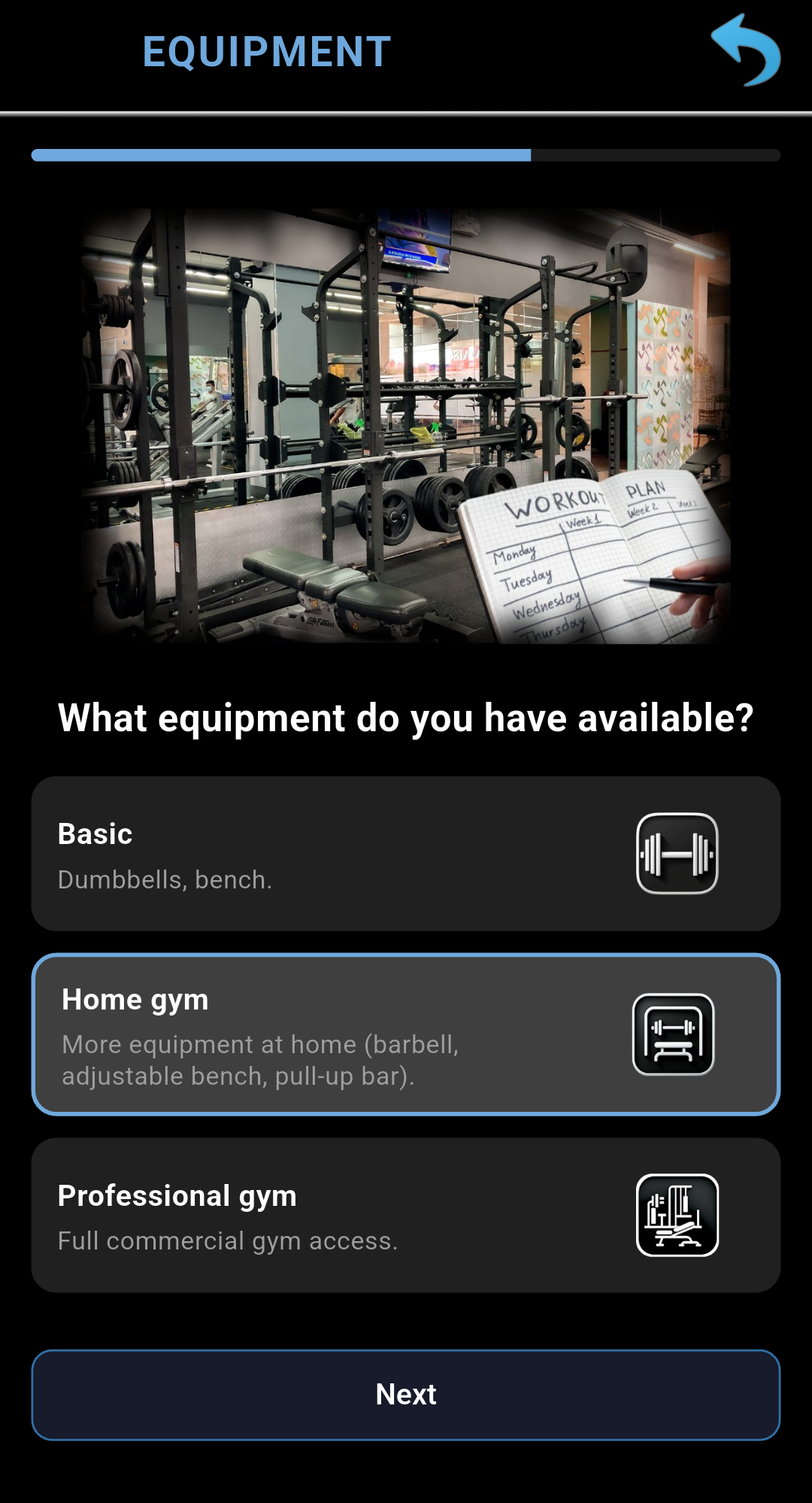
Most people do not need a more complicated routine. They need a plan they can repeat, measure, and improve. This guide shows you how to build that plan step by step—whether you train in a commercial gym, a home gym, or with only dumbbells and a bench.
An effective plan matches five things: your goal, experience, schedule, equipment, and ability to recover. If even one of those is ignored, the routine may look impressive on paper but fail in real life.
Specific: It is built around a clear goal such as muscle gain, strength, fat loss, or general fitness.
Repeatable: You can follow it consistently for several weeks.
Measurable: Sets, reps, weight, and completed workouts are tracked.
Progressive: It gives you a reason to add reps, weight, or better technique over time.
Flexible: Exercises can be swapped when equipment is busy or a movement does not fit you.
Step 1: Choose one primary goal
Your plan becomes clearer when it has one primary goal. You can still improve several qualities at once, but the main goal decides which exercises, rep ranges, and progression rules receive priority.
Build muscle
Prioritize stable exercises, enough weekly volume, and sets performed close to technical failure. Most working sets will fall between 6 and 15 reps, with some higher-rep isolation work.
Get stronger
Center the plan on a few major lifts and practice them consistently. Use lower-to-moderate rep ranges, longer rest periods, and smaller weight increases.
Lose fat while keeping muscle
Keep resistance training structured. Do not turn every workout into random high-intensity circuits. Maintaining strength and training performance helps protect muscle while nutrition creates the calorie deficit.
Step 2: Pick a realistic training frequency
The best number of workout days is the number you can maintain during a normal week—not your most motivated week.
Days per week
Good starting split
Best for
2
Full Body A / Full Body B
Beginners and very busy schedules
3
Full Body or Upper / Lower / Full Body
Balanced progress and recovery
4
Upper / Lower repeated
Intermediate lifters
5
Upper / Lower / Push / Pull / Legs
Experienced lifters with reliable recovery
For most people, three or four weekly sessions provide enough training stimulus without making the plan difficult to sustain. If you are unsure, start with three days. You can always add work later.
Step 3: Select movement patterns before exercises
Do not build a routine by collecting favorite exercises. First make sure the week covers the major movement patterns:
Squat or knee-dominant movement
Hip hinge
Horizontal press
Vertical press
Horizontal pull
Vertical pull
Single-leg work
Direct arm, calf, and core work as needed
Then choose exercises that match your equipment and skill level. A barbell back squat is not automatically better than a leg press or goblet squat. The better exercise is the one you can perform safely, load progressively, and repeat with consistent technique.
Step 4: Set weekly volume
Training volume is the amount of hard work you perform. More is not always better. Beginners often make excellent progress with roughly 6–10 challenging sets per major muscle group each week. Intermediate lifters may need more, but volume should increase only when recovery and performance support it.
A simple starting point is 2–4 working sets per exercise and 4–7 exercises per session. Warm-up sets prepare you for the lift but do not need to be counted as hard working sets.
Step 5: Choose useful rep ranges
3–6 reps: Useful for strength-focused compound lifts.
6–10 reps: Strong balance of load, technique, and muscle-building stimulus.
10–15 reps: Effective for machines, dumbbells, and isolation work.
15–25 reps: Useful for selected isolation exercises when technique stays controlled.
You do not need to use every rep range in every workout. Give each exercise a target range and keep it stable long enough to measure progress.
Step 6: Add a progression rule
A plan without progression eventually becomes maintenance. The simplest method is double progression:
Choose a rep range, such as 8–12.
Use the same weight until you reach the top of the range on all planned sets with good form.
Increase the weight by the smallest practical amount.
Repeat from the lower end of the range.
Example: you perform dumbbell bench press for 10, 9, and 8 reps. Over the next sessions, build toward 12, 12, and 12. Then increase the weight and continue.
Stop guessing between workouts
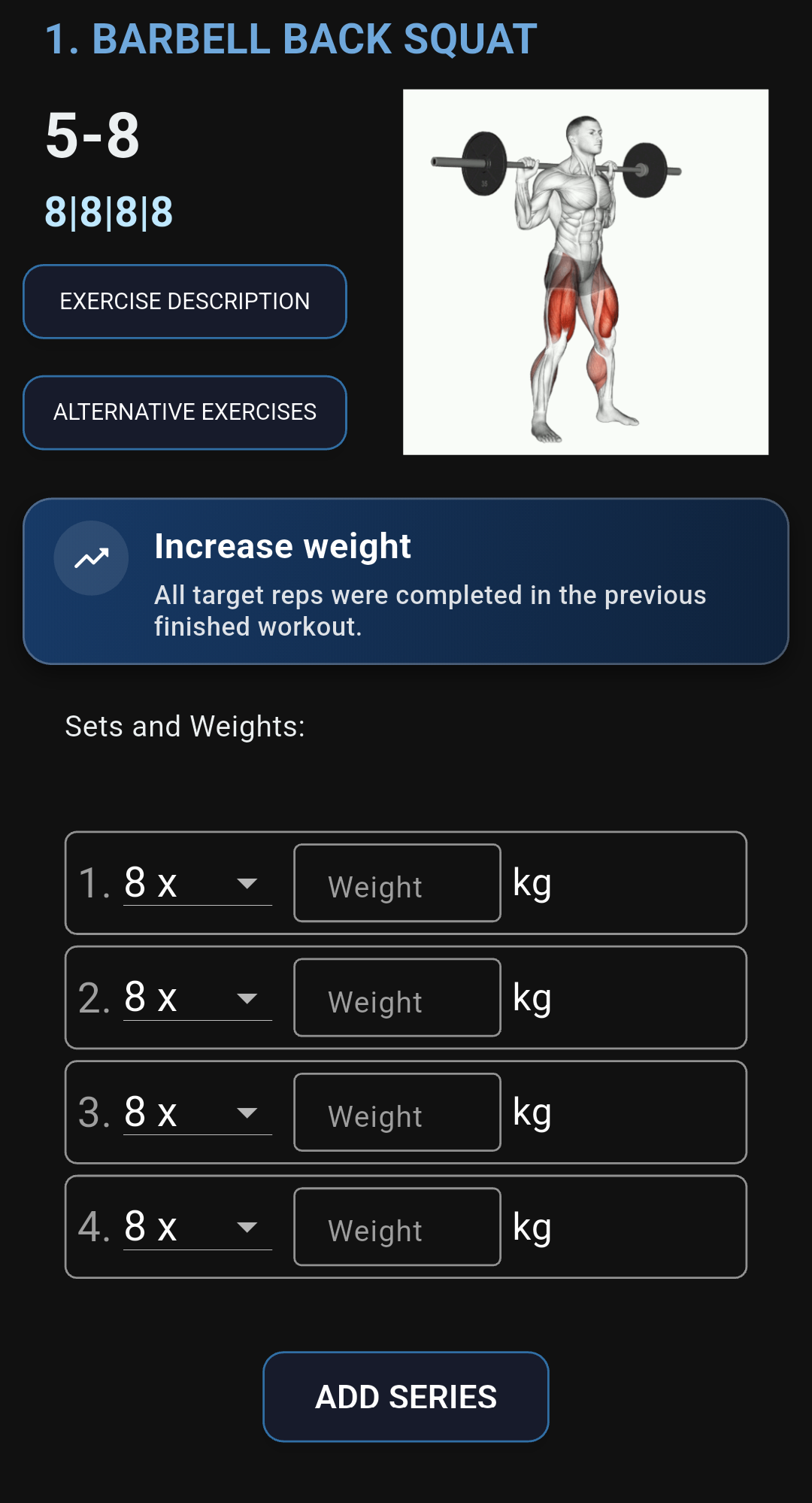
X-Fighter Fit generates a structured plan from your experience, equipment, and weekly schedule, then helps you log sets, reps, and weights.
Record the exercise, weight, reps, and completed sets. Also note major technique changes or unusual fatigue. You do not need a complicated spreadsheet. You need enough information to answer one question before the next session: what should I try to improve today?
Review trends across several weeks, not one workout. Performance naturally fluctuates because of sleep, stress, nutrition, and schedule changes.
A practical 3-day example
Day 1: Upper emphasis
Dumbbell bench press — 3 × 8–12
Chest-supported row — 3 × 8–12
Seated dumbbell press — 2 × 8–12
Lat pulldown — 3 × 8–12
Lateral raise — 2 × 12–20
Day 2: Lower emphasis
Back squat or leg press — 3 × 6–10
Romanian deadlift — 3 × 8–12
Split squat — 2 × 8–12 per side
Leg curl — 2 × 10–15
Calf raise — 3 × 10–15
Day 3: Full body
Incline dumbbell press — 3 × 8–12
Pull-up or pulldown — 3 × 6–12
Goblet squat — 3 × 10–15
Hip thrust — 3 × 8–12
Cable row — 2 × 10–15
Biceps curl and triceps pressdown — 2 × 10–15 each
Common mistakes to avoid
Changing exercises every week: Repetition is what makes progress measurable.
Starting with too much volume: Leave room to add work when needed.
Training every set to complete failure: Hard sets matter, but technique and recovery matter too.
Ignoring equipment reality: Build alternatives into the plan before the gym is crowded.
Using motivation as the schedule: Put training days on your calendar.
Failing to log workouts: Memory is not a progression system.
When should you change the plan?
Do not change a routine just because it feels familiar. Change it when your schedule or equipment changes, an exercise repeatedly causes discomfort, or progress has stalled despite consistent execution, sleep, and nutrition. Often the first adjustment should be small: one exercise swap, fewer sets, more recovery, or a clearer progression target.
Final checklist
One primary goal
A realistic number of training days
All major movement patterns covered
Manageable weekly volume
Clear sets and rep ranges
A progression rule
A simple workout log
Exercise alternatives for busy equipment
Your plan does not need to be perfect on day one. It needs to be clear enough to start and structured enough to improve. Build the simplest plan that fits your life, track it honestly, and let several weeks of results guide the next adjustment.